Jeju is an island of distinct regions, not a compact city with one central sightseeing district. A good itinerary starts with the accommodation base and transport choice. This guide compares the north, south, east and west, then explains how to approach volcanic landscapes and coastal travel without assuming that every visitor wants to drive or hike.
Jeju is an island of distinct travel bases, not a single neighborhood. Choose accommodation and transport before building an east, south or west-coast itinerary, and reserve a weather alternative.
The east: Seongsan, nearby coast and an optional Udo day
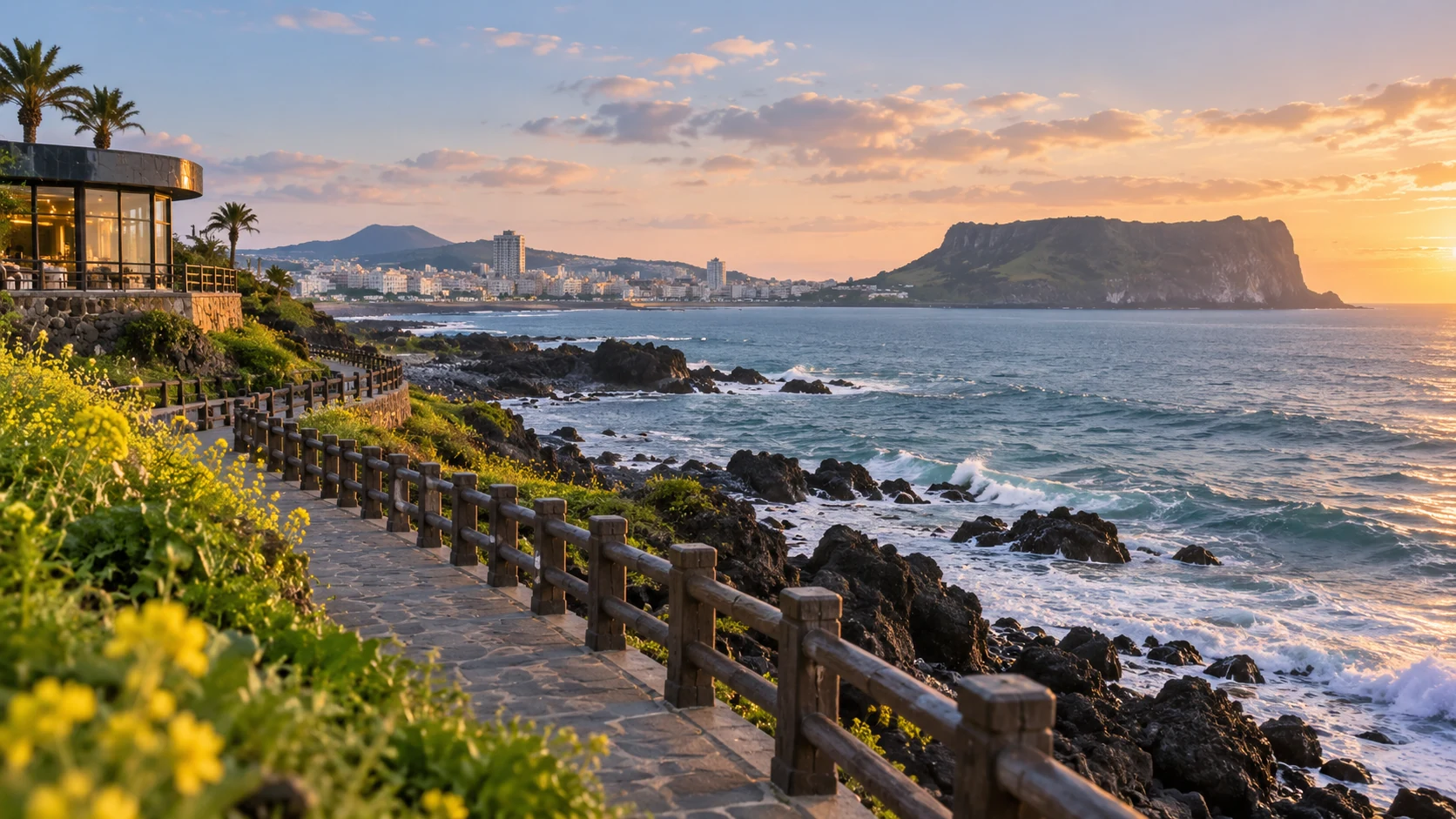
Seongsan Ilchulbong is one of Jeju’s best-known volcanic landscapes and part of the UNESCO-listed Jeju Volcanic Island and Lava Tubes property. The official tourism guide also describes Gwangchigi Beach and other eastern coastal destinations. A sensible eastern day can focus on Seongsan and its nearby coast instead of adding distant western attractions.
The official Visit Jeju guide identifies bus route 201 as one public-transport option through parts of the eastern coast. That is useful for understanding the network, not a guarantee that the historical timetable or fare remains current. Check the actual route for your date and starting point. If you want to visit Udo, verify ferry operation and weather conditions separately; do not treat an island ferry as an always-available bus connection.
For walking routes, check the actual trail, terrain and any access restrictions. A volcanic viewpoint may have a different physical demand from a flat coastal promenade. There is no requirement to climb a peak to have a rewarding Jeju day.
Check the source: Visit Jeju — east-coast bus route and Seongsan guide, UNESCO — Jeju Volcanic Island and Lava Tubes
The south and west: different landscapes, different days
Seogwipo and the southern coast can support a day of waterfalls, coastal walks and local dining, depending on access and weather. The western side has different beaches, cafés and coastal scenery. The most useful approach is to select an area first, then choose one or two destinations within it. Avoid combining a southern waterfall, an eastern peak and a western sunset simply because each appears on a “top ten” list.
If you stay without a car, check the return route before committing to a remote coastal stop. A beach may be easy to reach on one bus and difficult to leave after the last service. If you are driving, leave enough daylight for unfamiliar roads and consider whether parking is available at the destination.
Check the source: Visit Jeju — Official island tourism information
An LGBTQ+ trip does not need a special itinerary to be meaningful
Jeju can be a destination for couples, solo visitors, friends or families who want ordinary travel experiences with space for their own preferences. Do not assume that a particular town or accommodation guarantees a specific LGBTQ+ social environment. If community events matter to you, use current public organizers and verify whether an event is actually taking place during your stay.
Respect other people’s privacy when photographing, tagging or sharing location information. For unusual legal, medical or safety questions, consult appropriate official or professional sources rather than relying on a general island guide. A comfortable trip can be as simple as a place to stay where you feel at ease, a manageable route and time to enjoy it.
Check the source: Visit Jeju — Official island tourism information
Where to stay: the island is not one neighborhood
| Base | A sensible reason to choose it | Plan around |
|---|---|---|
| Jeju City | Airport access, urban services and a convenient first or last night | Longer journeys to some southern and eastern landscapes |
| Seogwipo / south | Southern coast, gardens and a different town atmosphere | The airport and north-coast attractions are not nearby |
| Seongsan / east | Sunrise Peak and eastern coastal exploration | Fewer reasons to cross the island every day if you stay east |
| Aewol / west | West-coast cafés and scenery | Transport and the exact accommodation location matter |
| Jungmun | Resort-style accommodation and southern attractions | A resort location is not automatically a convenient public-transport base |
A two-night trip rarely benefits from changing hotels repeatedly. Choose a base that supports your main interests, then accept that one or two places may be better saved for another visit. For a longer stay, two bases can reduce repeated cross-island journeys if the accommodation changes themselves are not burdensome.
Rental car or public transport?
A rental car gives more flexibility for dispersed coastal stops, but it also creates responsibilities: valid driving documents, the rental company’s requirements, insurance terms, parking and weather. Confirm your eligibility and the actual vehicle arrangements before paying. If you prefer not to drive, use the official Jeju tourism service to plan a bus-based route around fewer destinations. The official eastern bus itinerary demonstrates how the island’s eastern coast can be explored by public transport; use current timetables rather than treating an old itinerary as a live schedule.
A taxi for an occasional difficult connection can be reasonable, but a full day of improvised long taxi journeys may cost more than expected. Compare the total cost and convenience before deciding. If you are traveling with someone who has limited mobility, prioritize the accessibility of the actual attraction, not merely the availability of a bus stop or parking area.
Seongsan Ilchulbong: choose the route you can enjoy
Seongsan Ilchulbong is a volcanic tuff cone formed by eruptions in shallow seawater and is part of the UNESCO-listed Jeju volcanic heritage. The official Visit Jeju guide distinguishes the paid summit route from the free coastal exploration area around Umutgae. The summit includes a steep stair climb, so a visitor who prefers not to ascend can still appreciate the landscape from the lower route. Check the current access conditions, weather, admission and closing information before setting out.
An eastern day can combine Seongsan with nearby coastal scenery and a meal in the area. Udo is an additional island excursion, not an effortless extension of every Seongsan visit. Ferry operations and access depend on conditions, so leave enough time and check the current service if you intend to go.
Hallasan is a separate kind of day
Hallasan is a national park and Korea's highest mountain. Its summit routes are not comparable to a casual beach walk. The official Jeju heritage guide gives the geographical context, while current national-park notices should be used for trail access, reservations, weather and safety. If you do not want a demanding hike, choose an appropriate lower-elevation walk or another natural destination instead of planning a summit simply because it appears on a must-see list.
Check wind, rain and visibility before any exposed coastal or mountain activity. A car does not eliminate weather risk, and a reservation does not make a trail suitable in poor conditions. An indoor cultural visit or a café with a view can be a worthwhile alternative when conditions change.
Sources and verification
The references below identify primary documents and official services. Directly reviewed sources are marked; untested services are identified separately. For the research method, review date and limitations, see Editorial Standards.
- Official Visit Jeju travel information Previous release reference; not rechecked in this revision
- Seongsan Ilchulbong natural and cultural heritage Previous release reference; not rechecked in this revision
- Eastern Jeju public-bus travel itinerary Previous release reference; not rechecked in this revision
- Hallasan and Jeju natural heritage Previous release reference; not rechecked in this revision
- Official Korea travel information Previous release reference; not rechecked in this revision
- Official train booking and service information Previous release reference; not rechecked in this revision