Karaoke in Korea is a social activity with several different formats, and a visitor does not need to be a confident singer to enjoy it. This guide explains what to expect from an ordinary noraebang, how coin karaoke differs, what to check before entering and how to explore public music culture without confusing it with adult entertainment.
This is a guide to ordinary music and singing-room culture, not a directory of adult entertainment. It explains different formats, practical controls and how to verify the particular business before visiting.
Noraebang and coin karaoke are different formats
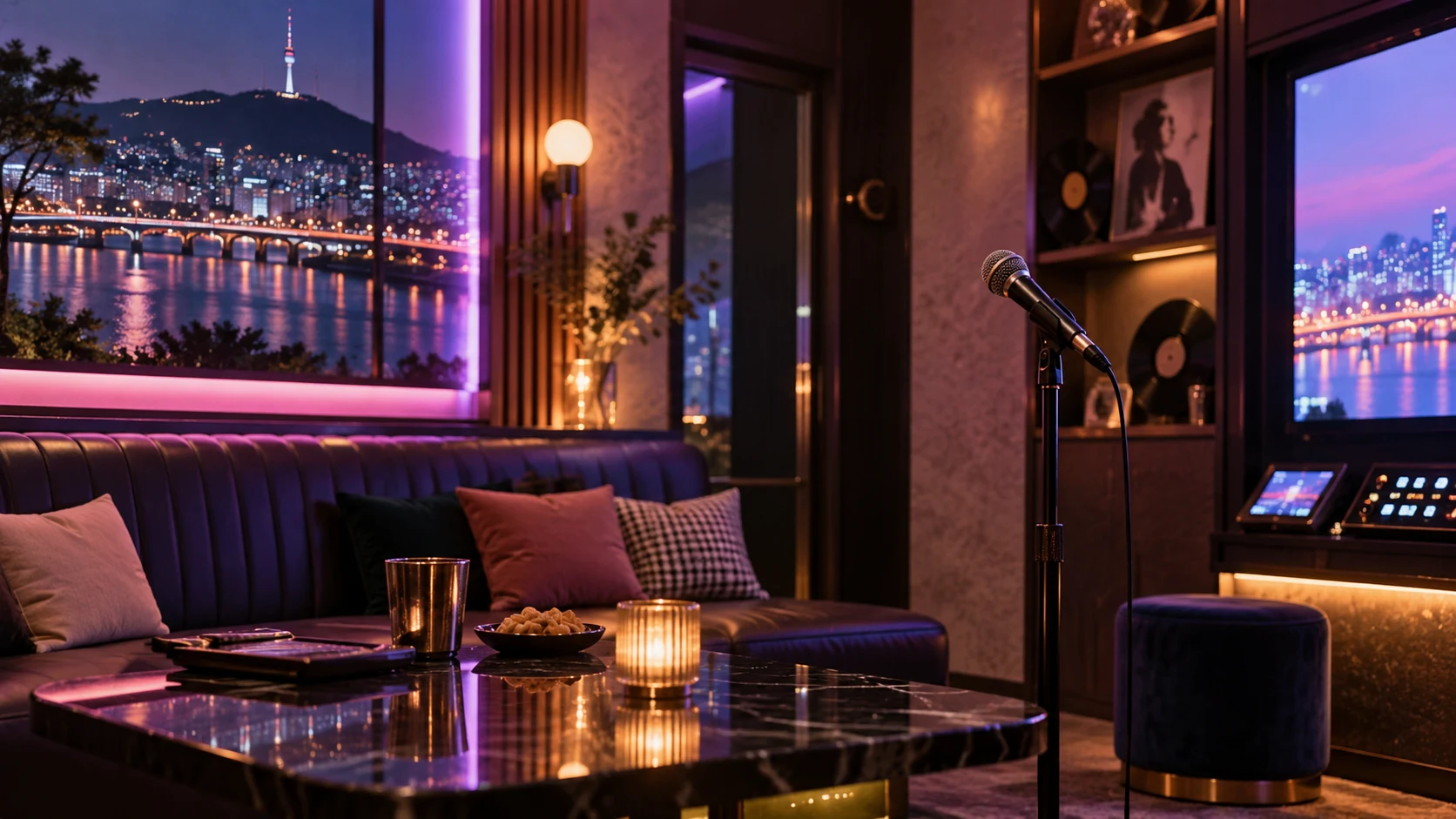
Noraebang (노래방) literally refers to a singing room. In an ordinary venue, a group rents a private room with microphones, a song system and a screen. Coin karaoke (코인노래방) is often designed for shorter sessions and may be convenient for one or two people. Individual businesses differ in room size, payment method, equipment and minimum session length, so the format should be confirmed before you enter.
A private singing room is not the same thing as a private social club or adult entertainment service. Kaydar discusses ordinary general-purpose music culture and does not recommend or certify adult-oriented establishments. A venue’s name alone is not enough to establish what it offers, and historical directory information should not be treated as current business verification.
What to check before paying
| Question | Why it matters |
|---|---|
| How is the session charged? | The price may be based on time, songs or a package |
| How many people can use the room? | Room size and pricing arrangements differ |
| Are English or other-language songs available? | Catalogues and search systems vary |
| Is food or drink required? | Some venues have separate policies or minimum purchases |
| What are the operating hours? | A late-night venue may not follow ordinary shopping hours |
| Can I use the room alone? | Coin karaoke may be convenient, but policies vary by business |
Ask for the price and session length before starting. Do not assume that the rules you encountered at one chain apply to every establishment. If you do not understand the payment arrangement, a simple question is better than an uncertain purchase.
How to use the song system
Song systems commonly allow searching by title or artist and may include multiple languages. If the control panel is unfamiliar, ask staff for a brief explanation. Try searching by a known song title, then check whether the system has the version you want. A translated title may not always match the catalog entry, and song availability varies by system.
For a group, taking turns and allowing different musical preferences makes the session more enjoyable. For a solo visitor, a short session can be a low-pressure way to experience the format. If you have hearing sensitivity or another accessibility need, ask about room volume, lighting and the possibility of adjusting the equipment.
Public music culture beyond a singing room
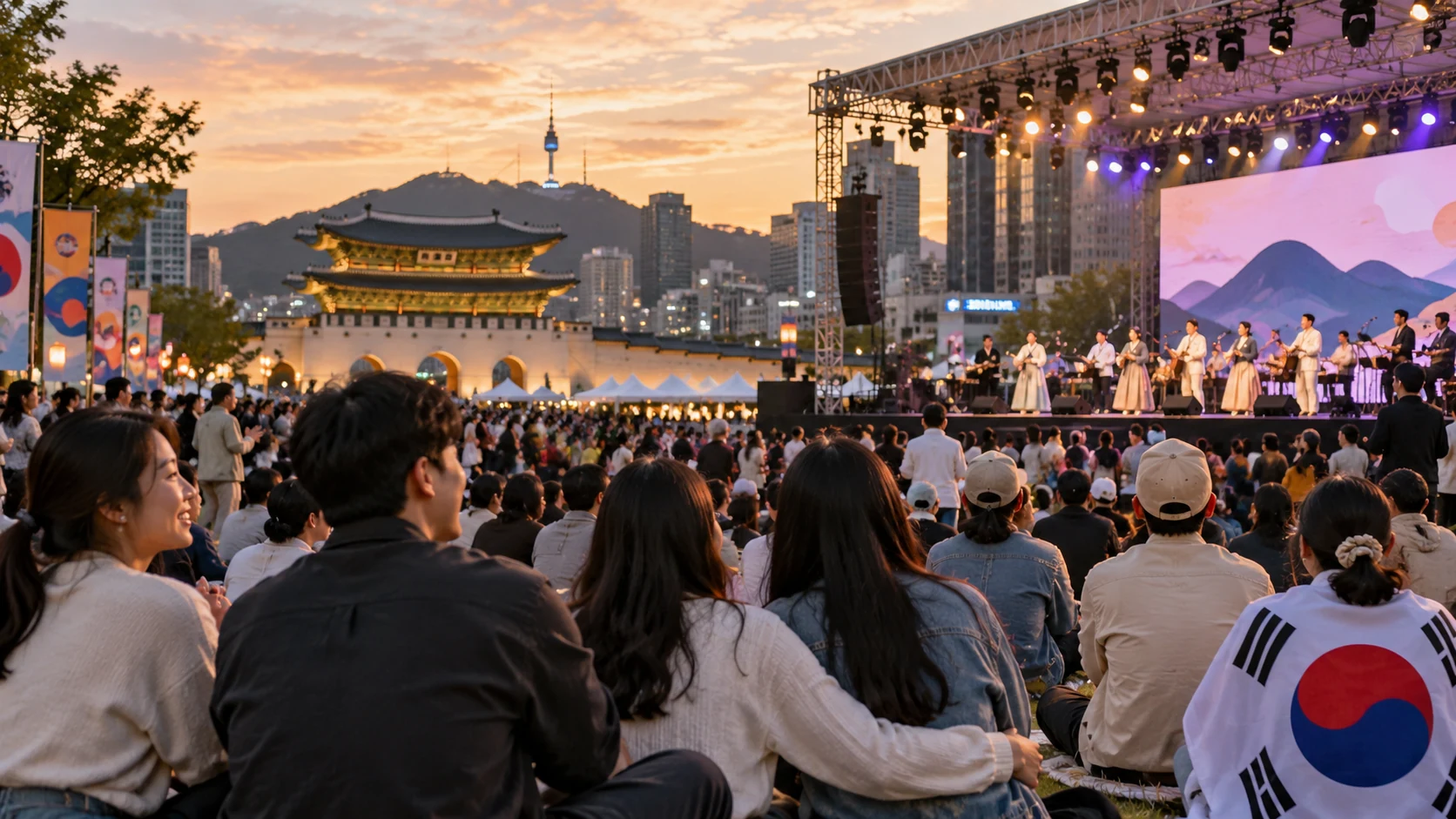
Korea also has concert halls, independent music venues, festivals and cultural performances. A visitor interested in music can choose an ordinary public performance rather than assuming that an evening activity must involve private nightlife. Check the event organizer, date, ticketing and venue access before making plans.
If music is part of your LGBTQ+ cultural interests, look for public programs and film or arts organizations that publish their own information. Do not infer that an ordinary karaoke venue is LGBTQ+-specific, and do not use a music guide to identify private community members.
Useful Korean words on the karaoke screen
The controls vary by manufacturer, but knowing a few common labels can make an unfamiliar song system easier to use. Ask staff to demonstrate the controls if the layout is different. Avoid changing settings you do not understand, particularly when another group is waiting for the room.
| Hangul | Meaning | When it helps |
|---|---|---|
| 노래방 | Singing room / karaoke | Identifying an ordinary venue |
| 코인노래방 | Coin karaoke | Looking for a shorter session format |
| 노래 찾기 | Find a song | Opening the search function |
| 제목 | Title | Searching by song title |
| 가수 | Singer | Searching by artist |
| 예약 | Reserve / queue | Adding a song to the queue |
| 취소 | Cancel | Removing a selection |
| 음량 | Volume | Adjusting sound |
| 마이크 | Microphone | Finding microphone settings |
| 시간 | Time | Understanding a time-based session |
These are common Korean words, not a promise that every machine uses the same button labels. Song number, search language and queue behavior depend on the system. Keep the volume comfortable for everyone and ask before recording another person’s performance.
Choose a music evening by the experience, not the label
For an ordinary singing session, compare a conventional room with a coin-karaoke format based on group size, session length and the catalogue you want. A group of friends may appreciate a room with seating and enough time to share songs; a solo traveler may prefer a shorter session. The important question is the actual business format and payment policy, not whether a name or photograph suggests a particular atmosphere.
For a live performance, start with a confirmed artist or event. The official Korea Tourism Organization provides general cultural and travel information, while current schedules and admission conditions should come from the organizer or venue. Check whether a performance is seated or standing, whether tickets are assigned, what language the program uses and how you will return afterward. Do not infer that a concert, a music bar or a private room is LGBTQ+-specific from its location alone.
Music can also be explored through an exhibition, record shop or public cultural program. For example, a visitor interested in Korean popular music could connect a record-shopping afternoon with a separately confirmed concert rather than relying on a vague promise of nightlife. This guide does not provide a directory of private encounters or adult-entertainment services. Its purpose is to help readers choose ordinary music experiences that suit their interests.
Sources and verification
The references below identify primary documents and official services. Directly reviewed sources are marked; untested services are identified separately. For the research method, review date and limitations, see Editorial Standards.
- English-language Korean learning resources Previous release reference; not rechecked in this revision
- Official Seoul travel information Previous release reference; not rechecked in this revision
- Official Korea travel information Previous release reference; not rechecked in this revision
- Official festival information Previous release reference; not rechecked in this revision
- Official film festival information Previous release reference; not rechecked in this revision