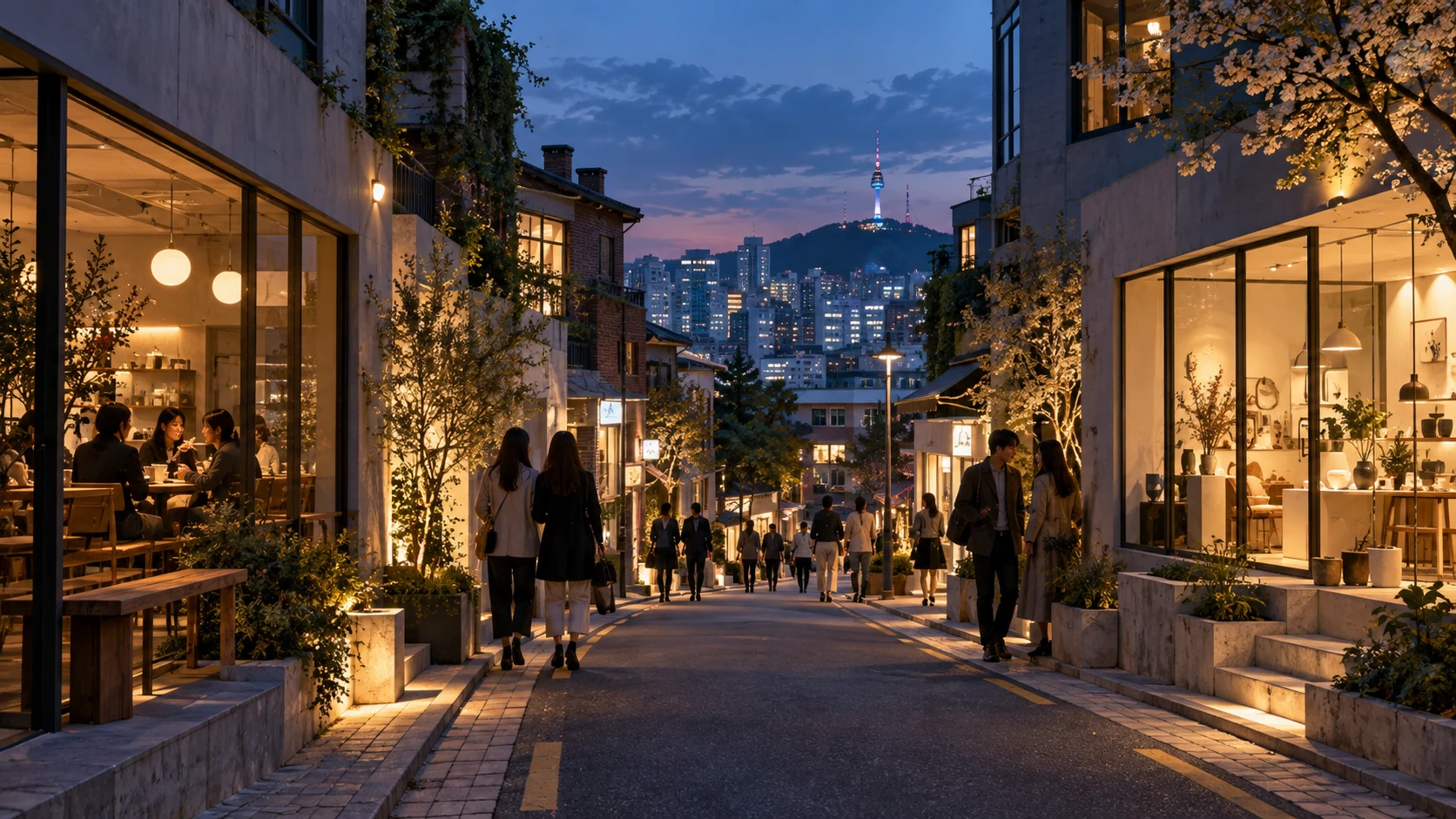

Seoul shopping can be a design experience, an ordinary practical errand or a search for a particular product. This guide compares the main retail districts and explains how to avoid wasting time on temporary shops, confusing tax-refund arrangements or purchases that are difficult to return.
Compare shopping districts and products by your actual needs. This guide does not endorse a specific seller, guarantee a tax refund or treat a temporary pop-up as a permanent attraction.
Choose a district by the type of shopping
| District | A useful reason to visit | Trade-off |
|---|---|---|
| Seongsu | Design-led retail, independent labels and changing concepts | Temporary shops and pop-ups require current confirmation |
| Myeongdong | Concentrated cosmetics, fashion and visitor-oriented retail | Crowds and promotional pricing make comparison worthwhile |
| Department stores | Broad brand selection and consolidated services | Prices, tax-refund arrangements and store policies vary |
| Dongdaemun | Fashion-oriented retail and large commercial complexes | Different markets and buildings follow different schedules |
| Traditional markets | Everyday goods, textiles, food and local commercial life | Payment, returns and opening arrangements vary by stall |
The official Seongsu guide provides context for the district’s changing retail scene, while the Seoul market overview introduces more traditional shopping areas. A shop’s appearance in a travel article does not guarantee that it will still be operating. Check the individual business when a specific product or pop-up is the purpose of your visit.
Fashion and skincare: compare the product, not just the storefront
For clothing, confirm the actual measurements, fabric, care instructions and return policy before paying. A label’s size number may not correspond to the size you normally wear. If a garment is expensive or difficult to exchange, ask whether trying it on is permitted and keep the receipt. For cosmetics, check the ingredients, expiry information and suitability for your own skin rather than assuming that a popular product is appropriate for everyone.
Avoid buying several unfamiliar skincare products at once simply because a promotion makes the price attractive. Patch testing and professional advice may be appropriate for sensitive skin or specific concerns. A travel shopping guide cannot establish the medical effectiveness of a product or replace individual dermatological advice.
Tax refunds: distinguish eligibility from the checkout process
The Korea Customs Service tax-refund guidance explains that eligible non-resident travelers may need to present their passport, purchase documentation and goods for export confirmation. Refund procedures and eligibility depend on the purchase and the applicable rules. Do not assume that every store, product or traveler qualifies, or that a refund is automatic because a shop displays a tax-free sign.
Before a large purchase, ask the retailer whether it participates in the relevant refund scheme, what documentation is required and how the refund is processed. Keep receipts and follow the current customs instructions for goods that must be presented at departure. Allow sufficient time at the airport if export confirmation is required. Do not publish fixed thresholds or refund percentages without checking the current official rules.
A practical buying checklist
Consider whether the item can be carried safely, whether your airline has relevant baggage restrictions and whether the product needs special handling. For electronics or appliances, check voltage, plug, warranty and regional compatibility. For expensive purchases, confirm the seller’s return and warranty conditions in writing if possible.
A good shopping day can combine one district with a meal and a nearby cultural stop. For example, Seongsu can be paired with Seoul Forest and cafés, while Myeongdong can fit a central city day. This is more coherent than crossing town repeatedly for small price differences or social-media recommendations.
How to evaluate a temporary shop or an unfamiliar brand
Seoul’s retail landscape changes quickly, particularly in districts known for concept stores and pop-ups. A social-media post may be useful inspiration but is not proof that a shop is still open. Before making a special journey, check the brand’s own announcement for the exact address, operating dates and whether the event requires a reservation. If an item is limited or the shop is temporary, also check how returns and customer service will work after the event closes.
For an unfamiliar fashion label, compare the garment itself: fabric composition, stitching, measurements, care instructions and whether the store permits trying it on. If a salesperson makes a product claim that matters to your purchase, ask for the written product information. A premium-looking interior is not evidence of superior materials, ethical production or a reliable warranty. Keep a digital copy of the receipt and the retailer’s stated return conditions when purchasing something expensive.
For skincare, distinguish cosmetic claims from medical claims. A product may be marketed for hydration, texture or appearance without being appropriate for your particular skin. Check ingredients and instructions, especially when buying an unfamiliar active ingredient. Do not infer medical efficacy from popularity, influencer endorsements or a discount. If you have a specific skin condition or are using prescription treatments, seek appropriate professional advice rather than treating a shopping guide as a clinical recommendation.
Buying across borders: plan the entire purchase
A product’s shelf price is only part of its cost. For electronics, compare regional warranty coverage, plug and voltage compatibility, software or network restrictions and whether service is available in your home country. For larger purchases, include baggage allowances and safe transport. The cheapest offer may be less useful if returning a defective item requires international shipping or a trip back to Korea.
The Korea Customs Service’s tax-refund guidance explains the Korean side of the relevant procedures, but a refund at departure does not automatically remove import duties or taxes in the destination country. Check the rules of your own customs authority for allowances, declarations and restricted goods. Keep your documents until you have completed the relevant export and import procedures. Do not assume a fixed refund rate, eligibility threshold or tax-free status for every purchase.
A practical shopping itinerary separates a browsing day from a specific-purchase mission. If the aim is discovering independent design, give Seongsu or another chosen district time for several stores and a nearby café. If the aim is a particular product, confirm inventory and retailer policies first, then travel to the appropriate branch. This approach avoids spending most of a short trip crossing the city for uncertain stock or promotional claims.
Sources and verification
The references below identify primary documents and official services. Directly reviewed sources are marked; untested services are identified separately. For the research method, review date and limitations, see Editorial Standards.
- Exploring Seongsu, August 2026 Previous release reference; not rechecked in this revision
- Shopping in Seoul traditional markets Previous release reference; not rechecked in this revision
- Tax refund procedures for departing travelers Previous release reference; not rechecked in this revision
- Official Seoul travel information Previous release reference; not rechecked in this revision
- Official Korea travel information Previous release reference; not rechecked in this revision